LOCAL GUIDE · TIMIȘOARA
What to see in Timișoara
Three squares for a first encounter, neighbourhoods for a second walk and the Bega riverbanks when you want to slow down. Choose a starting point that suits the time you have.
Start with the central squares
Victory Square links two easy-to-recognise landmarks: the Metropolitan Cathedral and the Palace of Culture, home to the Opera and theatres. Look at the palaces along the promenade, then approach the Opera façade. Its monumental central arch and ornamented sides reveal different stages of the building’s history.
Continue through Liberty Square towards Union Square. These are not three versions of the same space: each square has a different layout and rhythm of façades. In Union Square, the Roman Catholic cathedral, Baroque Palace and Brück House are reference points for an attentive walk. Instead of photographing only a panorama, choose a window, a doorway and an ornament.
The interactive city map shows these landmarks and themed walking suggestions. Walking durations are estimates with short stops, not opening hours, and do not include interior visits. For a longer outing, continue towards Theresia Bastion and notice the difference between the fortification wall and its inner courtyard.
Beyond the centre: Fabric and Iosefin
Explore Fabric around Traian Square, stopping to look at historic façades and the Millennium Church. Consult access notices in the guide: works and restrictions can change where it is comfortable to walk. A route on a map is not a substitute for signs and conditions on the ground.
In Iosefin, Piața Maria and the Water Palace offer a different visual character. At the Water Palace, look for water-inspired decoration, including carved shells and fish. Themed walks help you explore the neighbourhood without reducing a visit to a list of buildings. The map and discovery sections connect these places with details to observe and historic photographs.
A walk about the December 1989 Revolution
The Revolution walk starts at Piața Maria and continues towards the Cathedral, Opera, Liberty Square and Revolution Memorial. Stops in the application include context and sources, not just pins. Read the historical account of December 1989 to distinguish the solidarity at the beginning of the protests, the repression and the proclamation of a free city.
This is a way to read today’s city, not an exact reconstruction of participants’ movements. For an interior visit to the Memorial, check opening information directly with the institution. The walk can be selected in the map’s history filters.
The Bega and the city in old photographs
The Bega riverbanks and Rose Park offer a pause between building visits. Leave time for walking, bridges and views over the water. Keep cycle lanes clear when stopping for photographs.
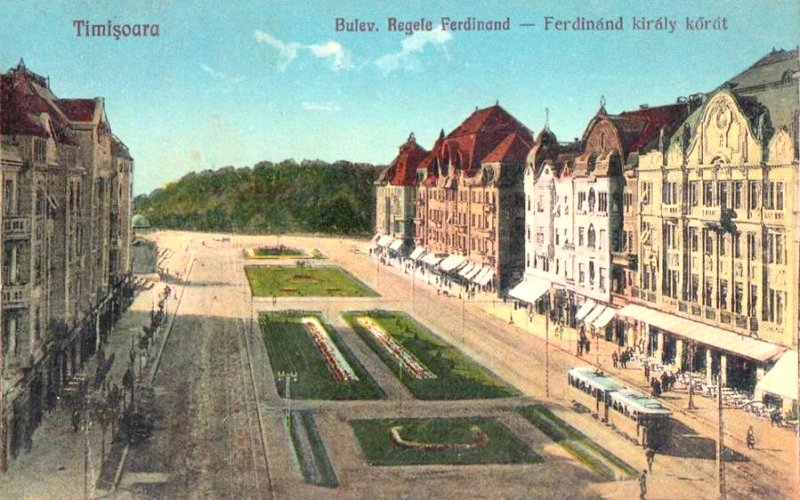
Then and now brings together historic views of Union Square, Liberty Square, Huniade Castle, the Corso promenade and other city landmarks. Each image has a source, a date or dating caveat, and reuse conditions. Compare an archive image with your present-day photo using a similar angle, remembering that buildings and public spaces may have changed.
Before you go
Consult the parking and transport information, then check local signs and official sources. Fares, timetables and access can change. Community photos can be displayed as a separate optional map layer, without confusing them with the sightseeing route.
The application is available in Romanian and English. Browsing the guide and making a local comparison video do not require an account. Accounts are used for community contributions and likes; publishing a photograph is a separate, deliberate action.