Francesco Illy, the founder of illycaffè, was born in Timișoara in 1892. After World War I he settled in Trieste and founded the company in 1933. His 1935 Illetta was a precursor of modern espresso machines. The local connection is the innovator himself — not a claim that espresso was invented here.
Iosefin · his childhood neighbourhoodA neighbourhood reference, not a verified birthplace pin.Find the place on a map ↗
On 3 November 1823, János Bolyai wrote to his father, Farkas, about the work that led to non-Euclidean geometry: “Out of nothing I have created a new world”. A plaque on the street bearing his name commemorates the letter. An idea that changed mathematics can also become a stop on your walk.
Strada János Bolyai · CetateLook for the memorial plaque on the corner building. Bolyai was not a friend of Leibniz: they lived in different periods.Find the place on a map ↗
Before the vines and Tarzan films, Johnny Weissmuller was an extraordinary swimmer. Born in Freidorf on 2 June 1904, he won five Olympic swimming gold medals and a water-polo bronze for the United States. This neighbourhood has an unexpected connection with both the Olympics and Hollywood.
Freidorf · his birthplaceThe map searches Freidorf, not a verified birth house. Weissmuller was one of the screen Tarzans, not the first.Find the place on a map ↗
On 12 November 1884, the electric street-lighting network began operating with 731 incandescent lamps. Municipal documentation describes Timișoara as the first city in continental Europe with electrically lit streets. This is a story about an urban network, not the world’s first light bulb.
Cetate · a walk through the historic centreLiberty Square is a starting point for a walk, not a claimed location of the “first bulb”.Find the place on a map ↗
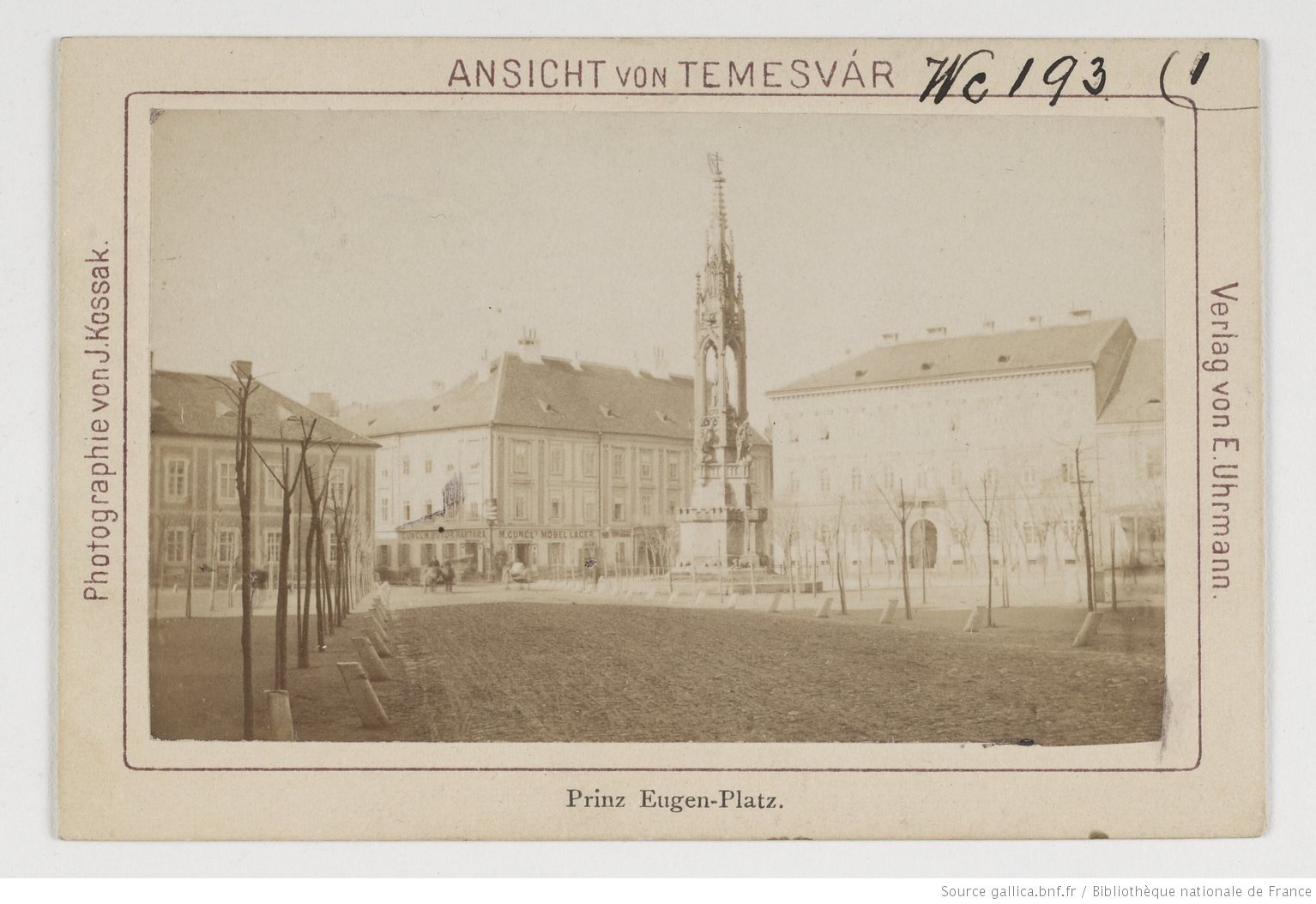
Archive photograph · 1880 József Kossak · 1880 · Gallica / Bibliothèque nationale de France · Wikimedia Commons. Domeniu public conform Wikimedia Commons Image source ↗ · Open image An 1880 photograph, before electric lighting; it does not show the inauguration.
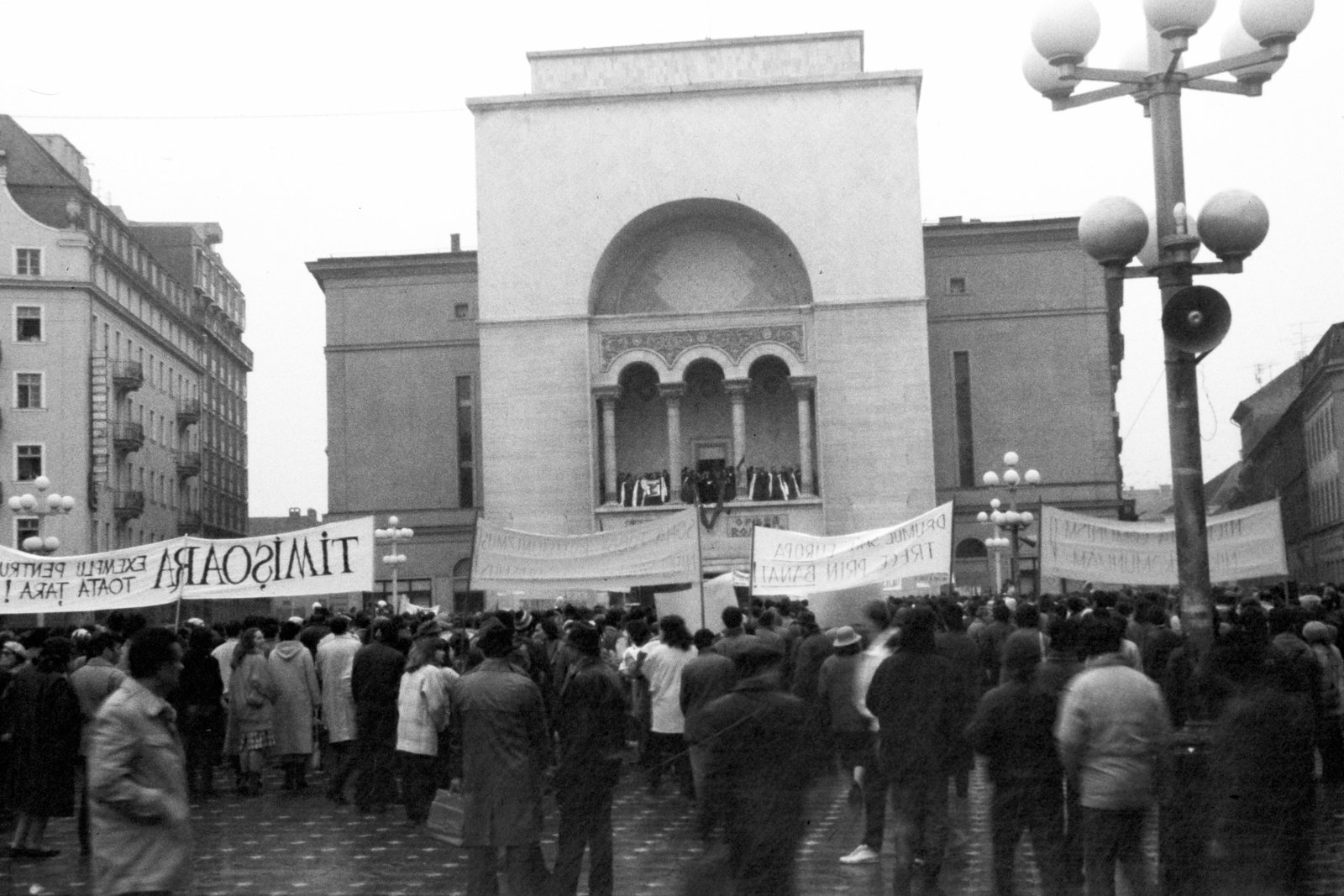
Around the Reformed parish in Maria Square, solidarity with pastor László Tőkés preceded the anti-communist protests of 16 December 1989. This is where the Romanian Revolution began. On 20 December, following repression and mass mobilisation, Timișoara was declared Romania’s first city free of communism.
Maria Square · Strada Timotei CipariuContinue towards Victory Square and the Opera balcony. These are also places of remembrance.Find the place on a map ↗
Archive photograph · 1989 FORTEPAN / Dőri András · 218627 · 1989 · autor neprecizat în fișă · versiune de arhivă 1600 px, fără decupare. CC BY-SA 3.0 Image source ↗ · Open image
The first horse-drawn tram line opened on 8 July 1869. Electric trams followed three decades later, on 27 July 1899. Today’s trams continue a transport story that started well before electric motors.
Saint George Square · CetateA reference point on the historic route; we do not claim this was Europe’s first tram.Find the place on a map ↗
The brewery was already operating in 1718, initially in Palanca Mare, and moved to Fabric after 1744. The beginning of the brewing tradition is therefore not the construction date of every building you see today: the complex was repeatedly extended and rebuilt.
Brewery · Fabric districtView the complex from public space; this page does not promise access to the industrial site.Find the place on a map ↗
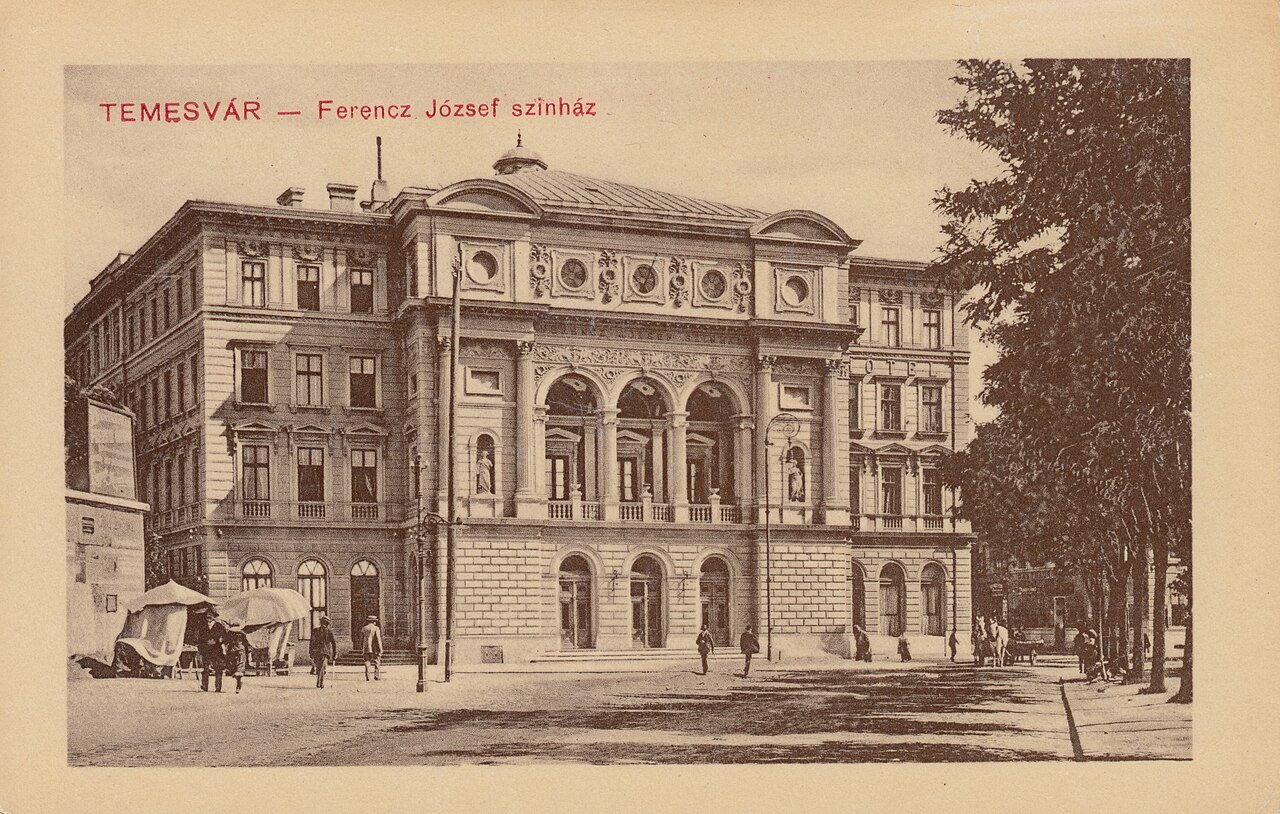
The Palace of Culture houses the National Theatre, the German State Theatre and the Csiky Gergely Hungarian State Theatre, alongside the Romanian National Opera. Multiculturalism is not only a word from the past: it is there in the theatre programmes.
Victory Square · 2 Strada MărășeștiEntrances depend on the venue and performance; check your ticket and the institution’s programme.Find the place on a map ↗
Archive photograph · cca. 1905–1918 Carte poștală · autor necunoscut · scanare Andreas Praefcke / Carthalia. Versiune Commons de 1280px, fără alte modificări. Domeniu public conform Wikimedia Commons Image source ↗ · Open image The theatre’s old façade, not its present appearance.
Urseni Waterworks opened on 1 June 1914. Its well group, iron-removal building and pump house formed one technological route. Today the Water Museum preserves the installations and industrial Secession architecture: city infrastructure can be an architectural discovery, too.
Water Museum · 26 Calea UrseniCheck the museum’s opening information before visiting.Find the place on a map ↗
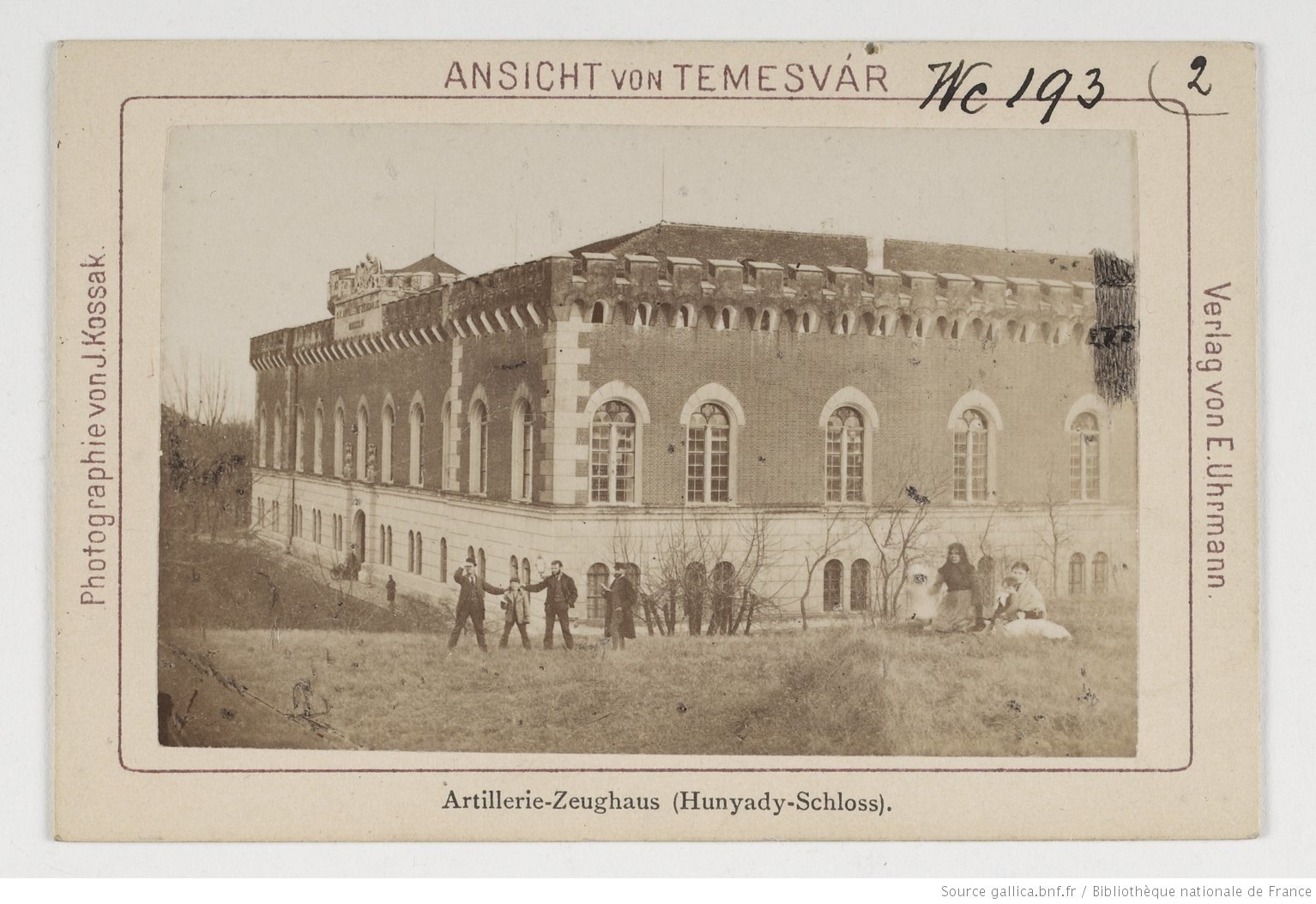
The castle built for Charles Robert of Anjou served as a royal residence between 1315 and 1323. The present building underwent major rebuilding, including reconstruction in 1856. Huniade Castle reveals several layers of history, not an unchanged medieval setting.
Huniade Castle · Huniade SquareThe exterior is the walking landmark; check interior access separately.Find the place on a map ↗
Archive photograph · 1880 József Kossak · 1880 · Gallica / Bibliothèque nationale de France · Wikimedia Commons. Domeniu public conform Wikimedia Commons Image source ↗ · Open image
Editorially checked on 28 October 2026. We distinguish documented facts from legends and suggest places to explore, not guaranteed building access. Illustrations are symbolic, not portraits or architectural reconstructions. Use “Archive photo” to see the originals; full credits are under “Sources and further reading”.