CITY HISTORY · 8 CHAPTERS
Timișoara’s history, through images and places
Understand what you see on a walk. Eight stops through time, archive documents and two drawings based on real images.
An introduction, not an exhaustive history. Events and images are dated separately; we do not invent scenes from periods without references.
01 / 1315–1323
A royal residence, not a castle frozen in time
The castle built for Charles Robert of Anjou served as a royal residence from 1315 to 1323. It was subsequently rebuilt, including after the 1443 earthquake under John Hunyadi. Its recognisable appearance today owes much to the 1856 reconstruction following the 1849 siege.
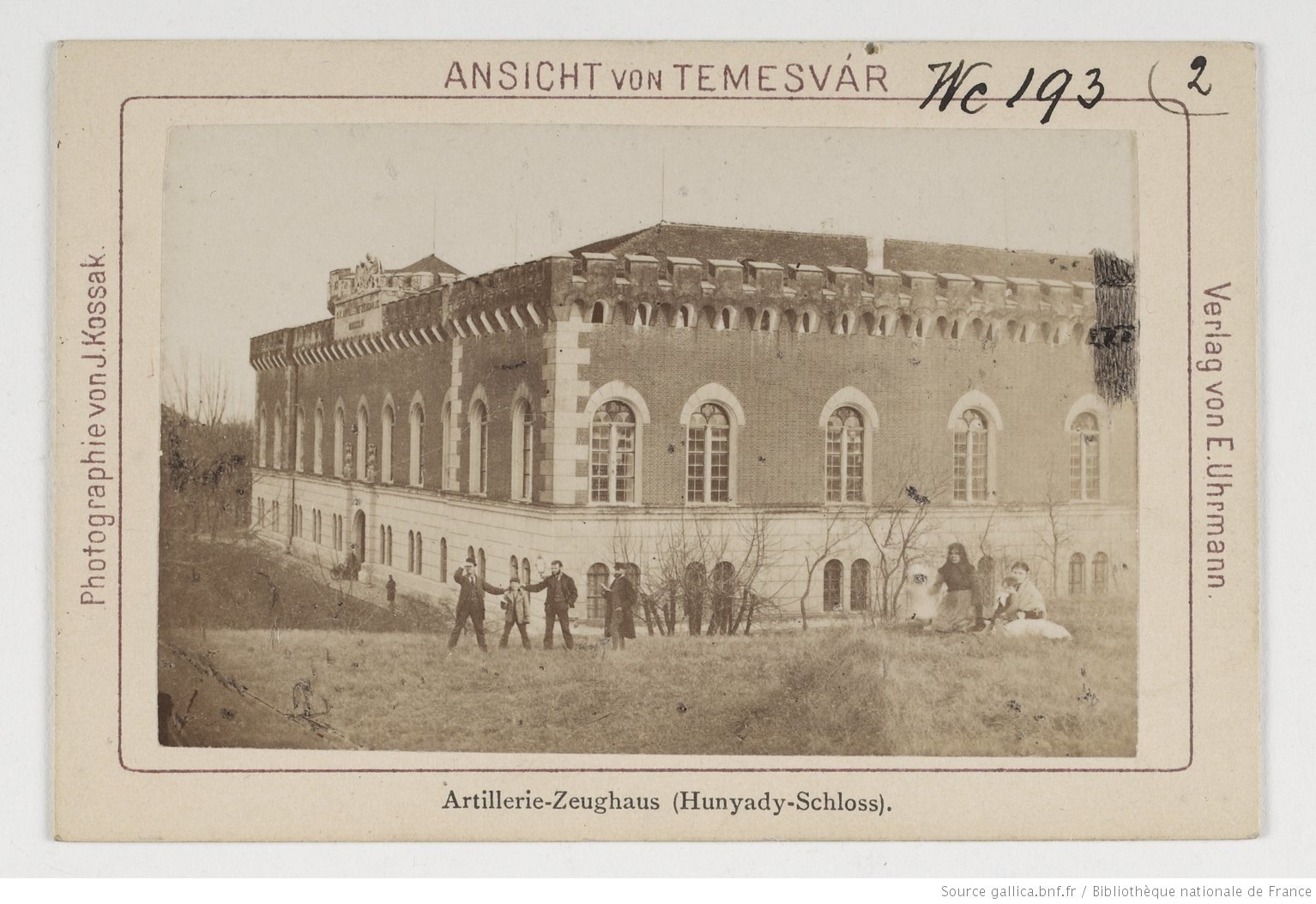
József Kossak · 1880 · Gallica / Bibliothèque nationale de France · Wikimedia Commons. Domeniu public conform Wikimedia Commons Source and licence ↗
The drawing is a contemporary visual interpretation. Consult the original for exact historical details.
02 / 1552–1716
Ottoman Timișoara
In 1552, the Ottoman Empire conquered the city, which became a provincial administrative centre. This period lasted until 1716. Timișoara’s history does not begin with its Baroque façades: earlier, less visible layers also lie beneath today’s city.
03 / 1716–1781
The fortress and the Baroque city
The Habsburg conquest of 1716 opened a new urban chapter. Work to regulate and canalise the Bega began in 1728; Timișoara received royal free city status in 1781. A walk through Cetate, between Union Square and Theresia Bastion, connects these dates with the city you can explore today.
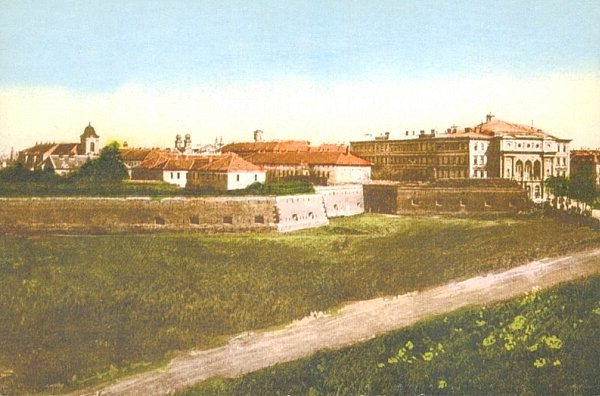
Autor necunoscut · carte poștală, cca. 1906. Domeniu public conform Wikimedia Commons Source and licence ↗
04 / 1875 / 1934–1936
One building, two faces of the city
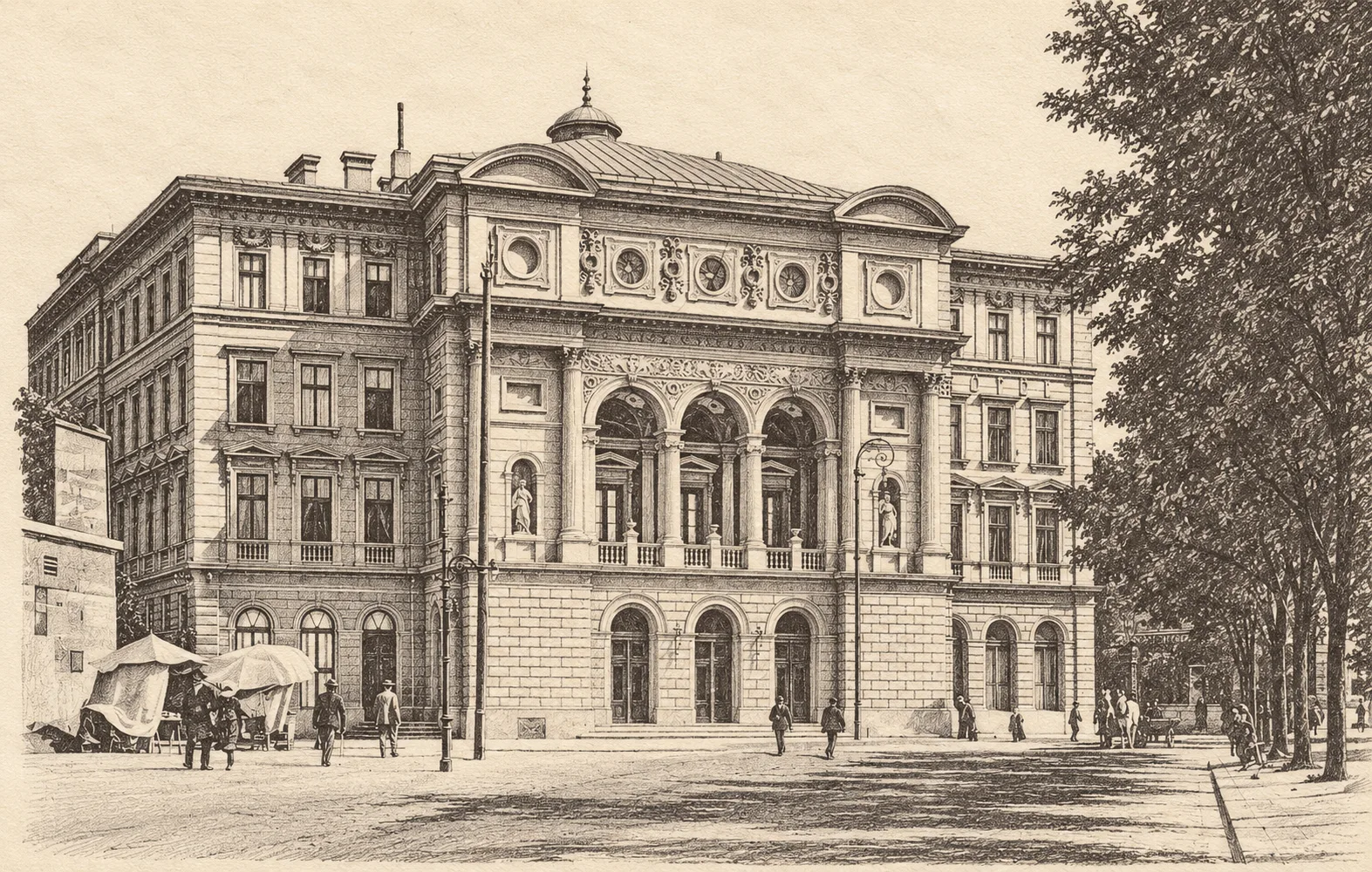
The theatre was completed in 1875. Reconstruction after the 1880 fire preserved its original form; the 1920 fire opened another chapter. Duiliu Marcu later transformed the central façade in 1934–1936 with its monumental travertine-clad arch. That is why the old postcard and today’s Opera look different.
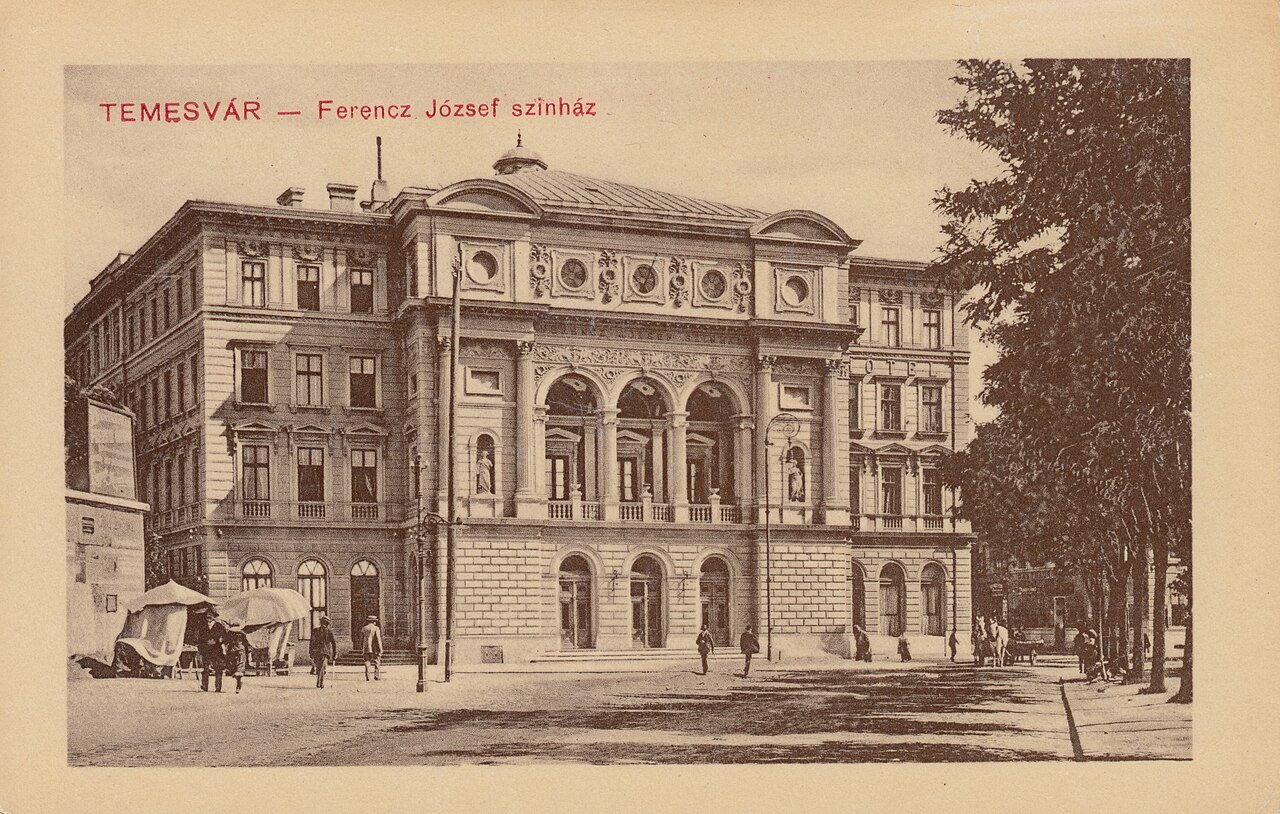
Carte poștală · autor necunoscut · scanare Andreas Praefcke / Carthalia. Versiune Commons de 1280px, fără alte modificări. Domeniu public conform Wikimedia Commons Source and licence ↗
The drawing is a contemporary visual interpretation. Consult the original for exact historical details.
05 / 1884
Electric light changes the city at night
Electric public lighting entered service on 12 November 1884. The historical study of Fabric records 731 incandescent lamps that year. This is a milestone in modernisation beyond architecture: infrastructure changes how people use their city.
Sources: Primăria Timișoara · Studiu istoric Fabric, p. 117 ↗
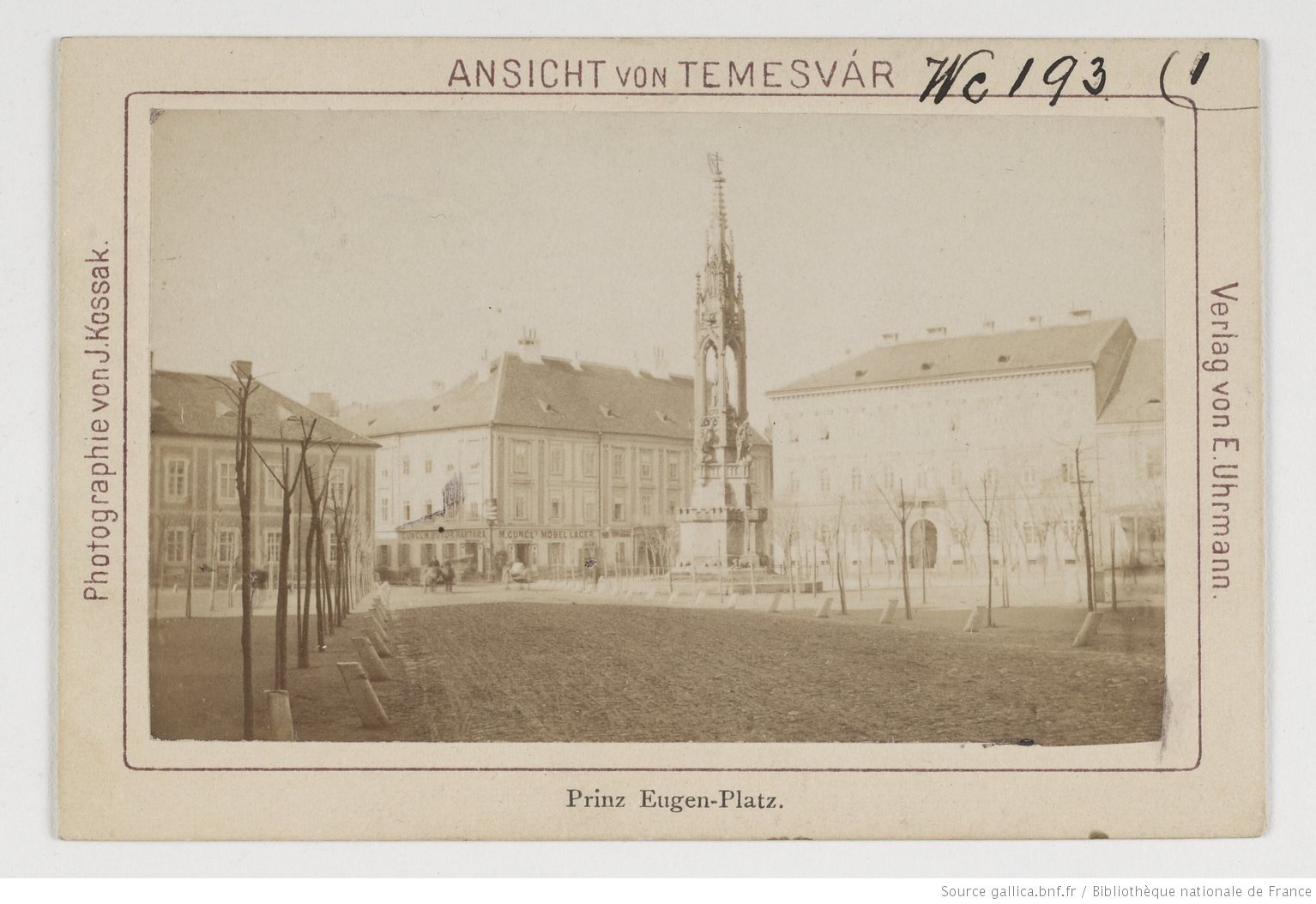
József Kossak · 1880 · Gallica / Bibliothèque nationale de France · Wikimedia Commons. Domeniu public conform Wikimedia Commons Source and licence ↗
06 / 1919
A new administrative chapter
Romanian administration was established on 28 July 1919, and the Romanian Army entered Timișoara on 3 August. These are distinct moments in the transition following the First World War. A postcard of Corso from the 1920s shows the centre during this new period.
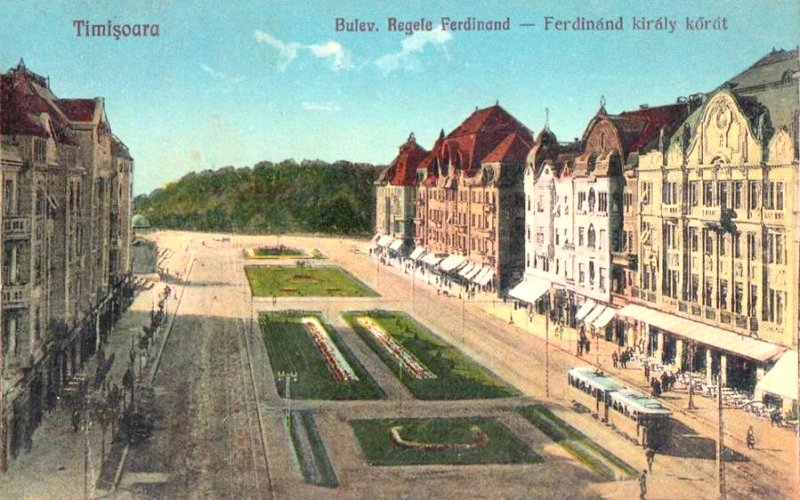
Carte poștală · autor necunoscut · anii 1920 · Wikimedia Commons. Domeniu public conform Wikimedia Commons Source and licence ↗
07 / 1989
From Maria Square towards freedom
The gathering around the Reformed church and pastor László Tőkés preceded the anti-communist protests of 16 December. Repression, casualties and wider mobilisation followed. On 20 December, a general strike and the crowds in the centre marked Timișoara’s declaration as a city free of communism. These places are sites of remembrance, not merely sightseeing stops.
Sources: Primăria Timișoara · Cronologia Revoluției ↗ · Casa de Cultură · Revoluția din Decembrie ↗
1989: people and places of freedom
Three original photographs from the FORTEPAN / Dőri András collection: the crowd, Victory Square and the Opera balcony. The archive records 1989, not an exact day. The complete images are preserved without retouching or colourisation.
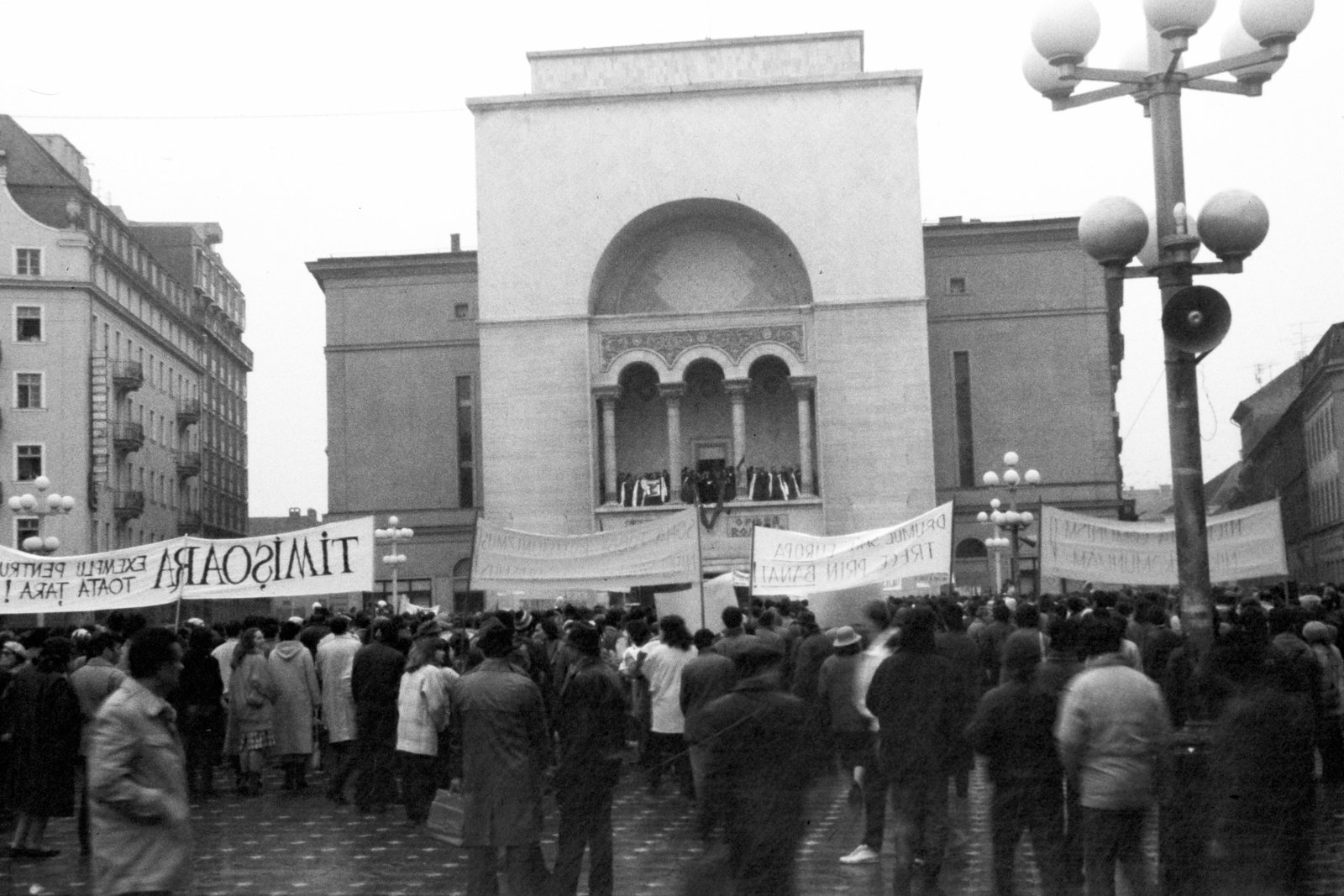
People gathered in front of the Opera, with its façade and balcony clearly visible. The photograph preserves the banners and the setting of the 1989 gathering. The archive does not establish the exact day; the camera position needs on-site verification.
FORTEPAN / Dőri András · 218627 · 1989Original record ↗ · CC BY-SA 3.0
Photographer unconfirmed in the record. Archive rendition at 1600 px, without cropping or AI alterations.

The crowd fills Victory Square; the Corso façades and the Cathedral in the background make the setting recognisable. This is an elevated view, not a promise of an accessible camera position today. The archive dates the photograph to 1989 without a specific day.
FORTEPAN / Dőri András · 218581 · 1989Original record ↗ · CC BY-SA 3.0
Photographer unconfirmed in the record. Archive rendition at 1600 px, without cropping or AI alterations.
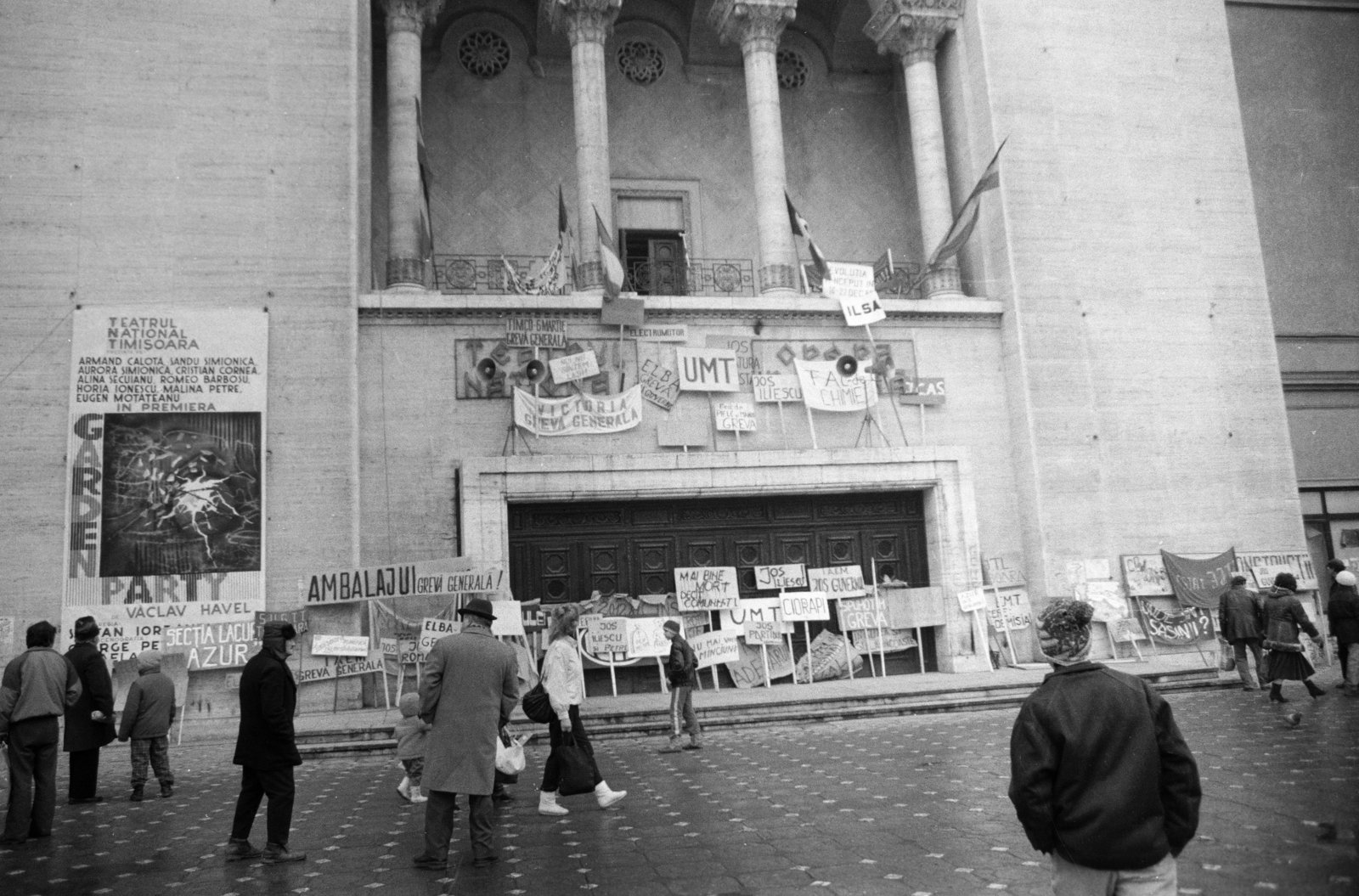
A frontal view of the Opera entrance and balcony, with the tricolour and messages displayed in 1989. The arch, columns and doors provide reference points for a present-day comparison. We retain the archive year without assigning the photograph to a particular day.
FORTEPAN / Dőri András · 218723 · 1989Original record ↗ · CC BY-SA 3.0
Photographer unconfirmed in the record. Archive rendition at 1600 px, without cropping or AI alterations.
08 / 2023
The city as a cultural stage
In 2023, Timișoara was a European Capital of Culture. The “Shine your light!” programme connected culture with civic participation and public space. History does not end here: the photographs and stories we preserve today will become tomorrow’s archive.
Editorial review: 24 October 2026. Credits and sources appear beside each image and chapter.