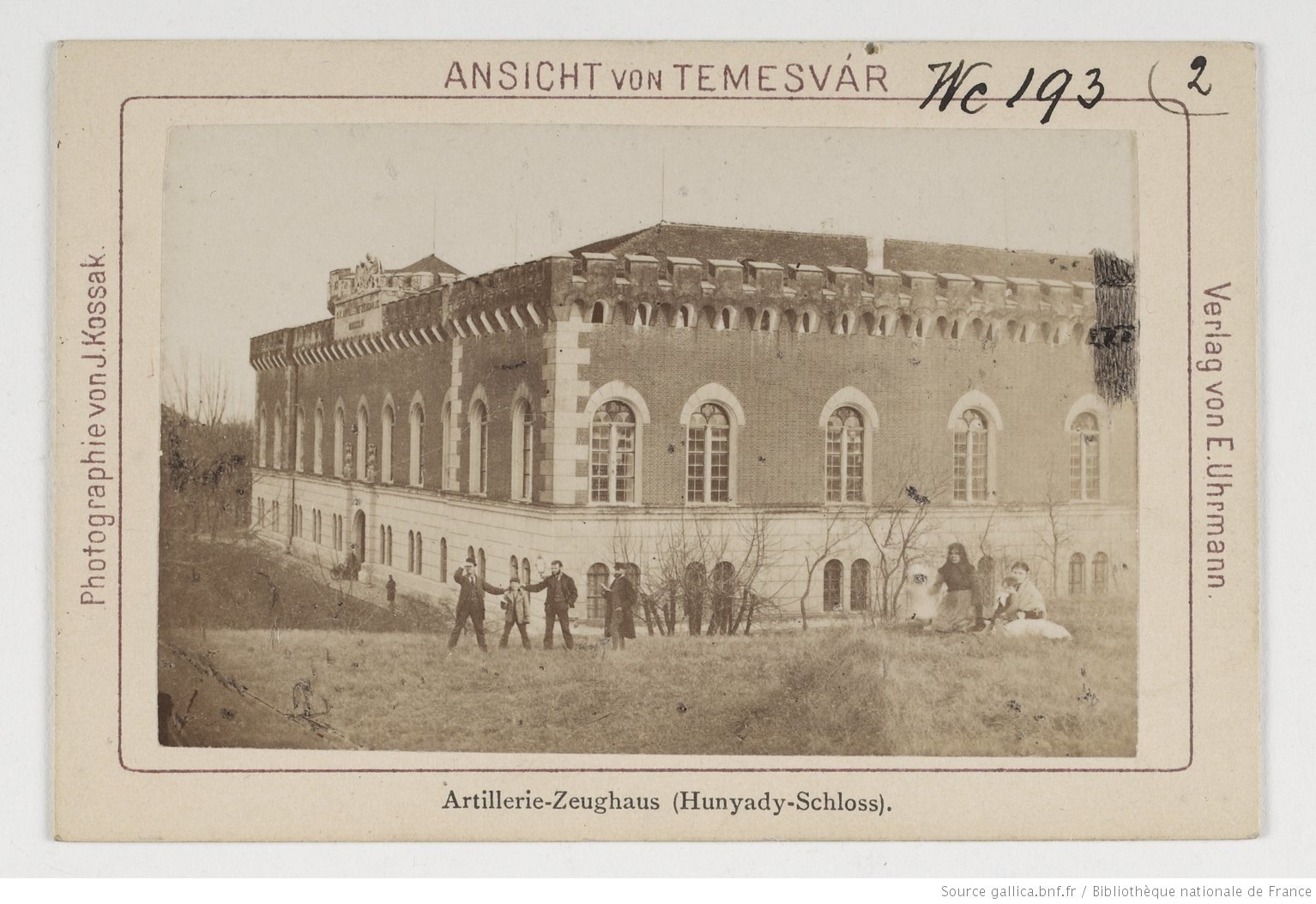
A royal residence in Timișoara
The castle built for Charles Robert of Anjou served as a royal residence between 1315 and 1323. This connection makes the place worth a stop even if you know it only from the outside. It does not mean that today’s visible walls have remained unchanged since the royal court was here. [1]
Which period are you actually looking at?
The building underwent major rebuilding; the 1856 reconstruction gave it its present form. József Kossak’s 1880 photograph therefore records a later stage, not the medieval castle. Its arches, crenellations and proportions provide a more relevant visual reference than a generic book or a fairy-tale castle. The municipal account also records repairs and enlargement by John Hunyadi after the 1443 earthquake. The name, royal residence and nineteenth-century form therefore refer to different stages in the life of the same place. [1]
Read the photograph before recreating it
In the 1880 photograph, start with the building’s corner and follow its two façades. Select features to compare: the upper line, large openings and the base of the walls. Before trying the same angle, find a safe position in today’s public space. You need not reproduce the whole frame exactly to notice change. The creator also supports a story using only the archive image; adding your own photograph is an option, not a condition for reading the article.
An attentive stop outside
In Huniade Square, look at the building as a layering of periods. Check institutional information separately for interior visits: this article does not guarantee access. Start a comparison with the 1880 photograph or create a Reel retaining the image’s date. The useful question is not “does it look exactly as it did in the Middle Ages?”, but “which traces of change can I recognise?”.