
Solidarity at Maria Square
Around the Reformed parish, solidarity with pastor László Tőkés preceded the anti-communist protests of 16 December 1989. Maria Square is therefore more than a navigation landmark. It is a place from which to follow the development of a gathering of support into a challenge to the regime. The chronology needs to be read in sequence, rather than reduced to a single photograph. [1]
Towards Victory Square and the Opera balcony
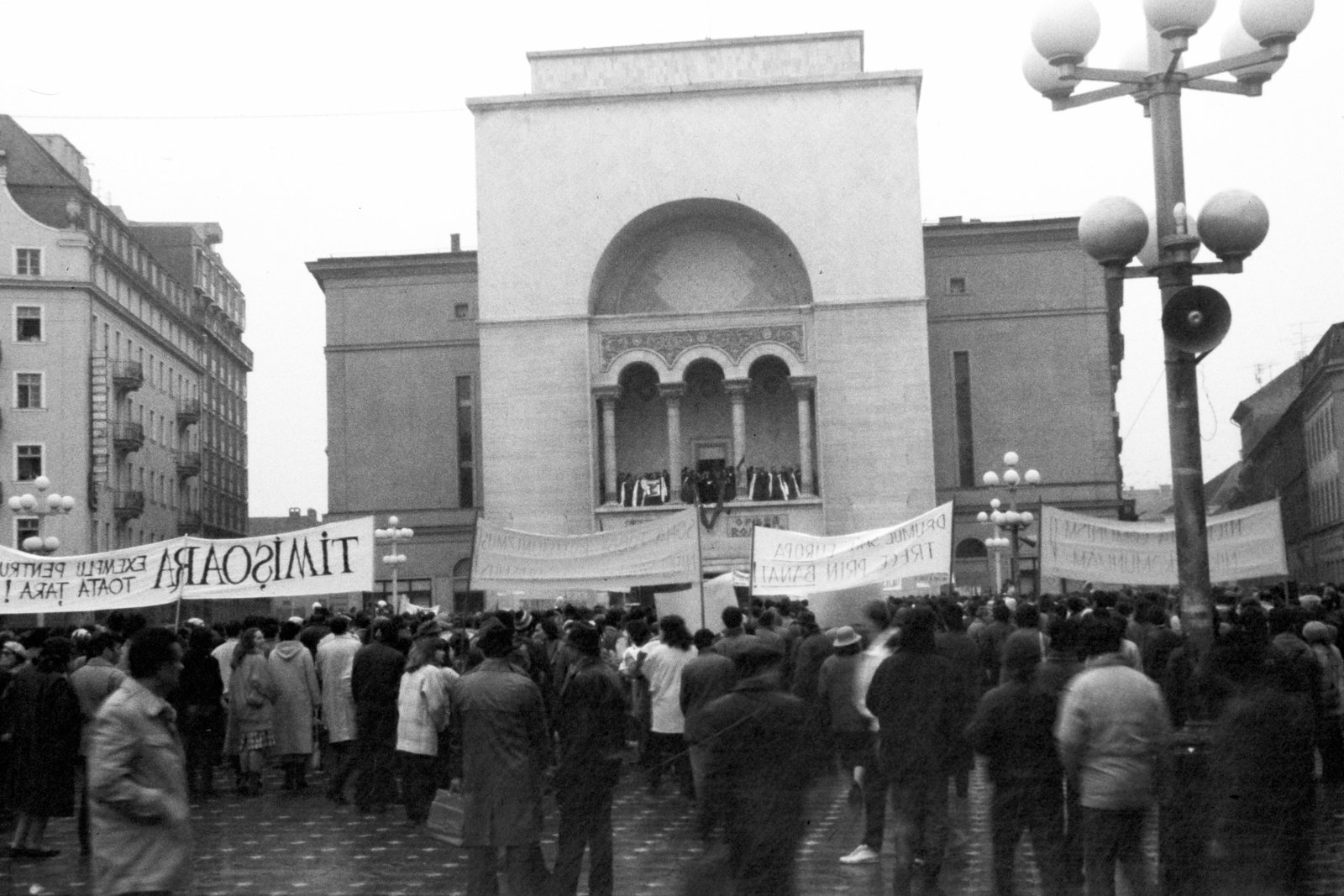
Following repression and mass mobilisation, on 20 December Timișoara was declared Romania’s first city free of communism. Victory Square and the Opera balcony are essential landmarks in that story. Between the beginning of the protests and this moment are people, victims and decisions; a visitor walk cannot replace their testimonies. Consult the timeline and sources rather than merging different days and places. [1] [2]
A route is not a single scene
Before setting out, open the timeline and choose stops you want to understand, not merely tick off. At each one, separate what the photograph shows, what the source says and what you can see today. A crowd photograph does not identify everybody or establish the hour and sequence of events on its own. The map helps with orientation; research gives the stops meaning. Keep a respectful tone rather than turn places of remembrance into backgrounds for gestures or visual effects.
Using images respectfully
For this page we chose an archive photograph of people gathered at Maria Square, with its date and credit. A crowd image can convey solidarity, but does not explain the whole event by itself. For this subject we suggest the mapped walk and source reading, rather than an entertainment template. If you photograph these places today, allow room for memorials and their significance.